

How to care for your stitches and perineum following the birth of your baby
The perineum is the skin and muscular area that separates your vagina and your anus (also called your back passage).
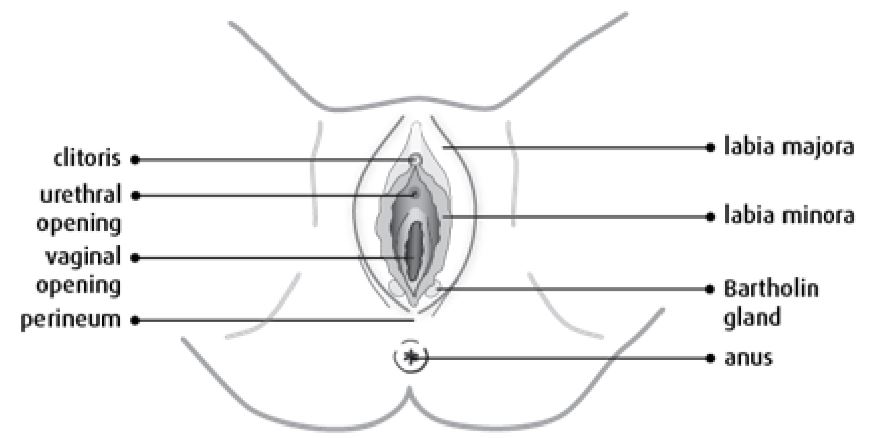
Bruising and tears
It is very common to experience bruising and tears in your perineum when you give birth as the opening of your vagina and your perineum need to stretch to allow room for your baby to be born.
Tears can occur in the perineum, labia (lips of the vagina) and inside the vagina. The size of the tear may also vary:
- A first-degree tear is a superficial tear to the skin of the perineum.
- A second-degree tear is deeper affecting both the skin and muscle of the perineum.
- Third and fourth degree tears are less common, involving the muscles around the anus (the internal and external anal sphincter muscles) and in the case of fourth degree tears, the anus itself. Your Doctor and Midwife will advise you if you have this kind of tear as the advice regarding healing and care may differ.
Episiotomies
An episiotomy is a surgical cut in the perineum, which is made to enlarge your vagina and help you give birth to your baby.
You may have needed an episiotomy for three reasons:
- if you had an assisted birth (with forceps or ventouse)
- if your baby became distressed during the birth
- if your midwife thought your perineum would tear badly.
Sitches (also known as sutures)
You will have had an examination of your perineum immediately after your baby’s birth which will have allowed your midwife or obstetrician to identify any grazes or tears you may have sustained and discuss their severity with you. There may be grazes or very small tears which will heal without the need for stitches, however, repair is offered if you have had an episiotomy and for tears:
- that involve the muscles layers of the perineum
- that are bleeding
- that are not well aligned (jagged)
Stitches stop any bleeding from a tear and join the skin and muscle together. The number of stitches varies according to the location and severity of the tear, however, the thread used to suture is dissolvable so they do not have to be removed.
The stitches start to dissolve after about ten days and have usually completely disappeared after six weeks. It is normal to find small pieces of the stitch material when you are bathing or when you go to the toilet.
Tears and episiotomies will cause pain and discomfort following birth. Sometimes, passing urine or having a bowel motion can be painful however, each day following your baby’s birth it should feel more comfortable.
It can take up to six weeks for your perineum to heal completely and may take up to six months to for you to feel totally comfortable again. If you have any questions or concerns about the healing process please speak to your midwife or GP.
Your stitches will be looked at within the first week after having your baby to make sure they are healing well. Please let your midwife or GP know if:
- your perineal area becomes hot, swollen, weepy, smelly or very painful
- tears which have been repaired start to open
- you develop a temperature and flu-like symptoms.
In any of these instances you may be developing an infection and need treatment with antibiotics.
Looking after your stitches
Your midwife will give you specific advice on hygiene, pain-relieving drugs and self-help measures, all of which will help to reduce your discomfort. However, here are some general tips to help you to feel more comfortable and help your perineum to heal:
- Take pain relief such as paracetamol. Do not wait until you are in pain, but take this on a regular basis for the first few days (no more than one to two tablets four times a day). While in hospital your midwife will be able to give you stronger pain-relief if you need it.
- Always wash your hands before and after you go to the toilet and/or change your sanitary towel (pad), especially when you go home. You should change your sanitary towel (pad) at least every four hours. Ensure it is secured in place so it doesn’t move around and cause further irritation.
- Pour warm water on your perineum when you sit on the toilet to pass urine. The warm water will dilute the urine so it won’t irritate the wound.
- Drinking plenty of water will also keep your urine diluted (make it less yellow), this will also help to reduce irritation when you pass urine.
- Pat the area dry from front to back to avoid introducing germs from the anus into the perineal and vaginal area.
- Begin doing gentle pelvic floor exercises as soon as you can after the birth to increase your blood supply to the area and help the healing process. These exercises will also help your pelvic floor regain its tone and control. Please discuss these with your midwife and take a look at the tab entitled ‘Shape up after pregnancy’ in your Healthier Together App or Website.
- Avoid standing or sitting for long periods and ensure you are comfortable when sitting to feed your baby. Try lying on your side to feed.
- Avoid perfumed soaps when washing the area. Frequent baths or bidets are soothing but staying in the bath too long will slow down the healing process so try not to sit in the bath for more than 20 minutes each time.
- Avoid wearing tight trousers or jeans.
- When you get home and have some privacy, you may find relief by lying in bed without your knickers or a sanitary towel on and letting your perineum ‘air dry’.
Having your bowels open
You can safely open your bowels without any damage occurring to your perineum or stitches after the birth. The first few times you have your bowels open, hold a clean pad against your perineum to protect your stitches.
- If you are unable to open your bowels, your midwife can give you the medicine lactulose (a stool softener). This will help you have your bowels open without straining.
- Drinking plenty of fluids and eating a well-balanced diet that includes fresh fruit and vegetables as well as fibre will also help you to avoid constipation.
What about sex?
It is quite safe to have sex when you feel ready but remember the need to use contraception from three weeks following the birth. The first few times you have sex use a lubricating jelly and try out different positions to find one that is comfortable for you. Don’t be surprised if it feels different.
In the first weeks and even months after the birth you may have no desire for sex at all and this is completely normal.